
In electrical and electronic circuits, all parts are mainly classified into active and passive components. These components are classified as either active or passive based on their functionality and ability to control electrical signals.
Active Components:
An active component in a circuit is a part that needs power to work and can control the flow of electricity. It can amplify signals.
Examples: Transistors, Operational Amplifiers (Op-Amps), Battery(Source) etc.

Active components are fundamental in modern electronic systems, like amplifiers, radios, and computers, where signal manipulation and control are necessary.
Passive Components:
A passive component is a part that doesn’t need power to work. It can’t control or boost electricity but can do other things like Store energy, dissipate energy, etc.
Examples: Resistor, Inductor, Capacitor etc.
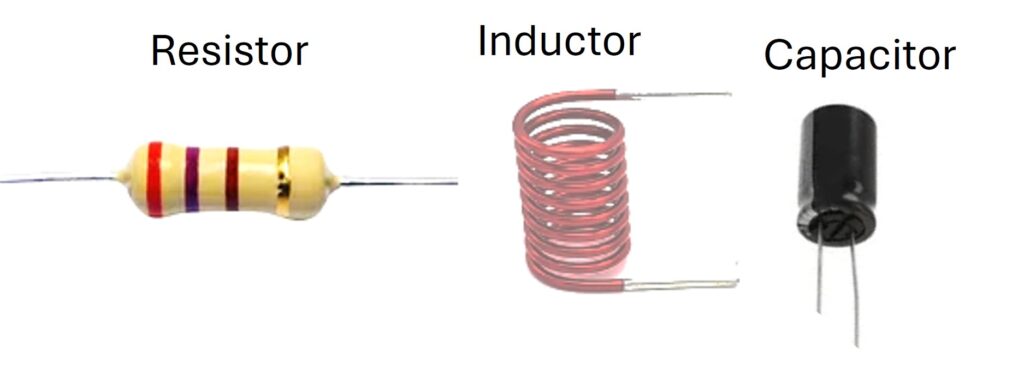
Passive components play a crucial role in stabilising and supporting the performance of circuits by controlling current and voltage levels.
Difference between Active and Passive Components:
| Active Components | Passive Component |
| Requires external power to operate | Does not require external power |
| Can amplify, control, or switch signals | Cannot amplify, only store or dissipate energy |
| Can add energy to a circuit | Cannot add energy, only dissipate or store it |
| Examples: Transistors, Diodes, Operational Amplifiers (Op-Amps), Battery(Source) etc. | Examples: Resistor, Inductor, Capacitor etc. |
FAQs on Active and Passive Components
1. What are active and passive components?
Active and passive components are the main parts of an electronic circuit.
- Active components need extra power to work and can control the flow of current.
- Passive components do not need extra power and only store or limit energy.
2. What is the main difference between them?
Active components can amplify signals, but passive components cannot.
Passive parts only store, block, or release electrical energy.
3. What are some examples of active components?
Examples of active components are:
- Transistor
- Diode
- Integrated Circuit (IC)
- SCR (Silicon Controlled Rectifier)
4. What are some examples of passive components?
Examples of passive components are:
- Resistor
- Capacitor
- Inductor
- Transformer
5. Do passive components need power to work?
No. Passive components do not need any external power supply. They work with the energy already in the circuit.
6. Why are active components important?
Active components are important because they amplify signals, switch currents, and control voltages in electronic devices.
7. Why are passive components important?
Passive components are important because they support active components.
They help to store energy, filter signals, and protect the circuit.
8. Can a circuit work with only passive components?
Yes, but such a circuit cannot amplify or control signals.
It can only store, filter, or divide voltage.
9. Which type is more important?
Both are important.
Active parts control and amplify, and passive parts support and balance the circuit.
10. How do they work together in a circuit?
Active and passive components work together to make a complete circuit.
Active parts handle signal and power control, while passive parts make the flow smooth and stable.