
Draw the layout of wind energy power plant that utilizes permanent magnet synchronous machine as electric generator and explain the working of this system.
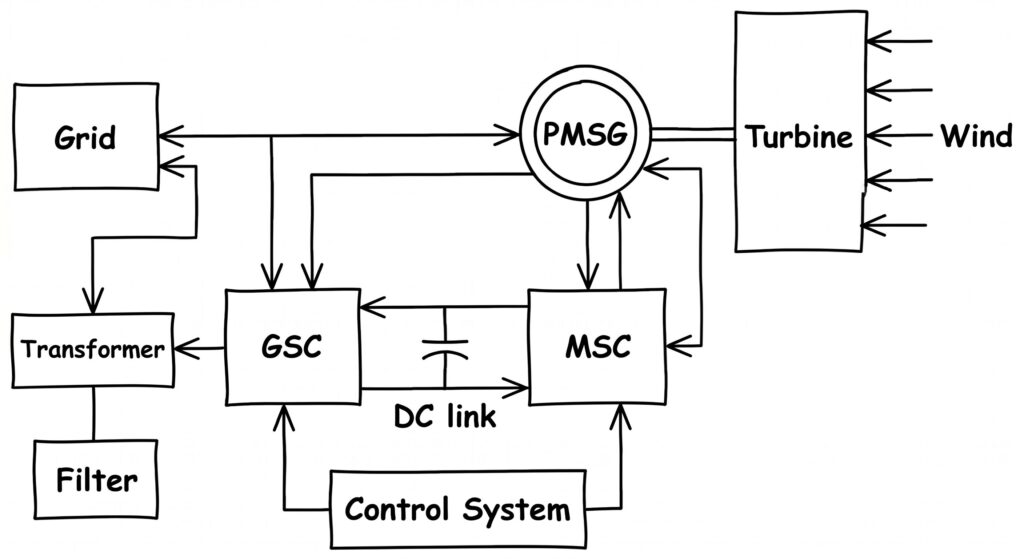
A wind energy power plant using a Permanent Magnet Synchronous Generator (PMSG) converts wind energy into electrical energy efficiently. It uses power electronic converters to handle variable wind speeds and deliver stable, high-quality power to the grid.
Turbine:
Captures kinetic energy from the wind using blades and converts it into rotational mechanical energy. The speed of rotation changes with wind speed.
PMSG (Permanent Magnet Synchronous Generator):
Uses permanent magnets in the rotor to create a magnetic field. When the rotor spins, it produces variable voltage and frequency AC power depending on wind speed.
MSC (Machine Side Converter):
Converts the variable AC from the generator into DC. It also controls generator speed to extract maximum power from the wind (MPPT).
DC Link:
Consists of capacitors that store and smooth the DC voltage. It acts as a buffer between the generator side and grid side.
GSC (Grid Side Converter):
Converts DC into fixed-frequency AC suitable for the grid. It also controls power flow and maintains voltage and power quality.
Filter (LCL):
Removes high-frequency harmonics produced by the converter switching. This ensures smooth and clean power output.
Transformer:
Steps up the voltage level of generated power to match the grid requirements for efficient transmission.
Grid:
The external electrical network where the generated power is supplied for distribution and use.